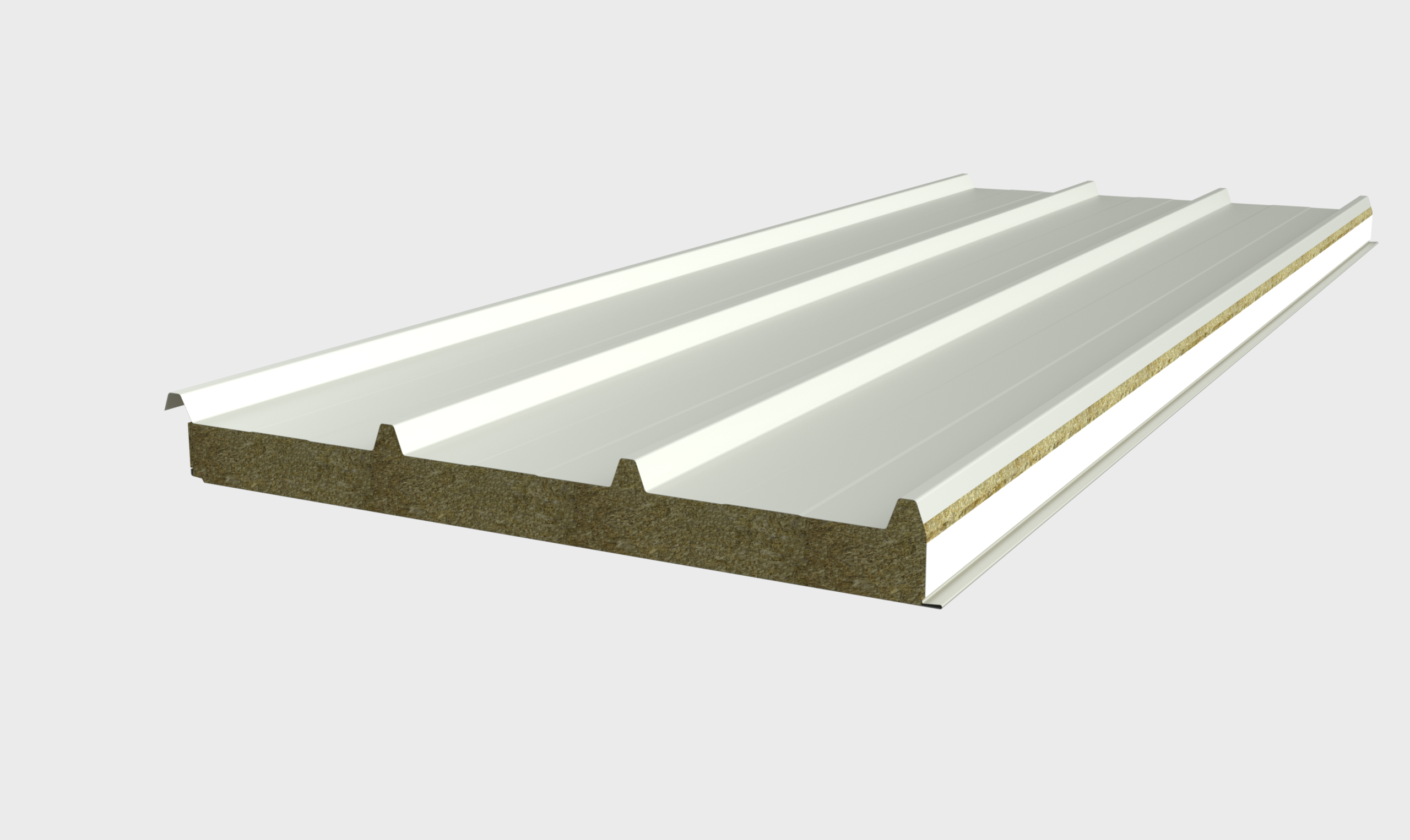
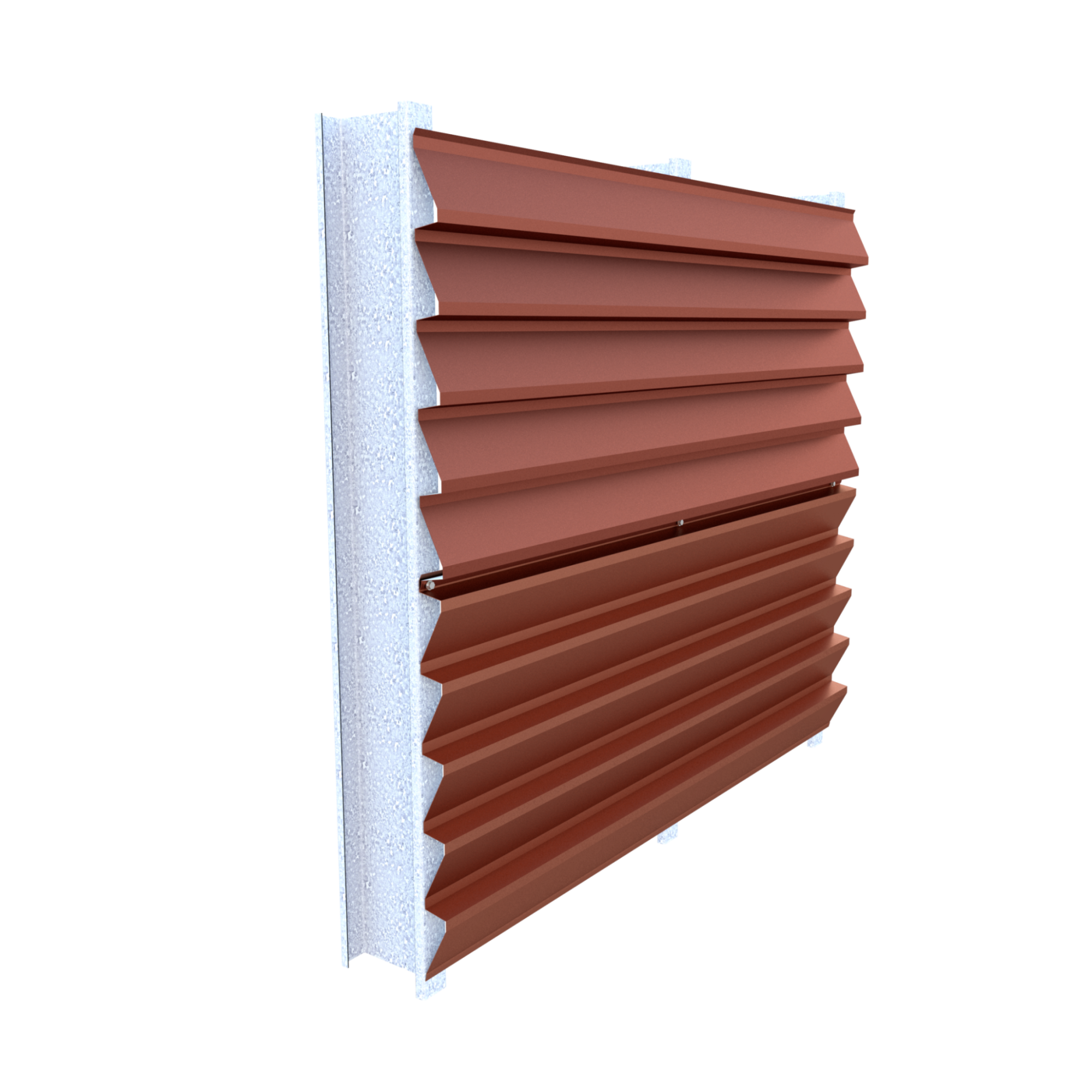
In contemporary architecture, metal cladding has become a key element in achieving fluid, unique and technically advanced designs. In this context, KingZip, the solution for roofs and façades using interlocking panels, stands out as one of the most innovative technologies on the market thanks to its ability to adapt to curved, organic and three-dimensional shapes.
Case Study: San Pedro de Alcántara Sports Hall
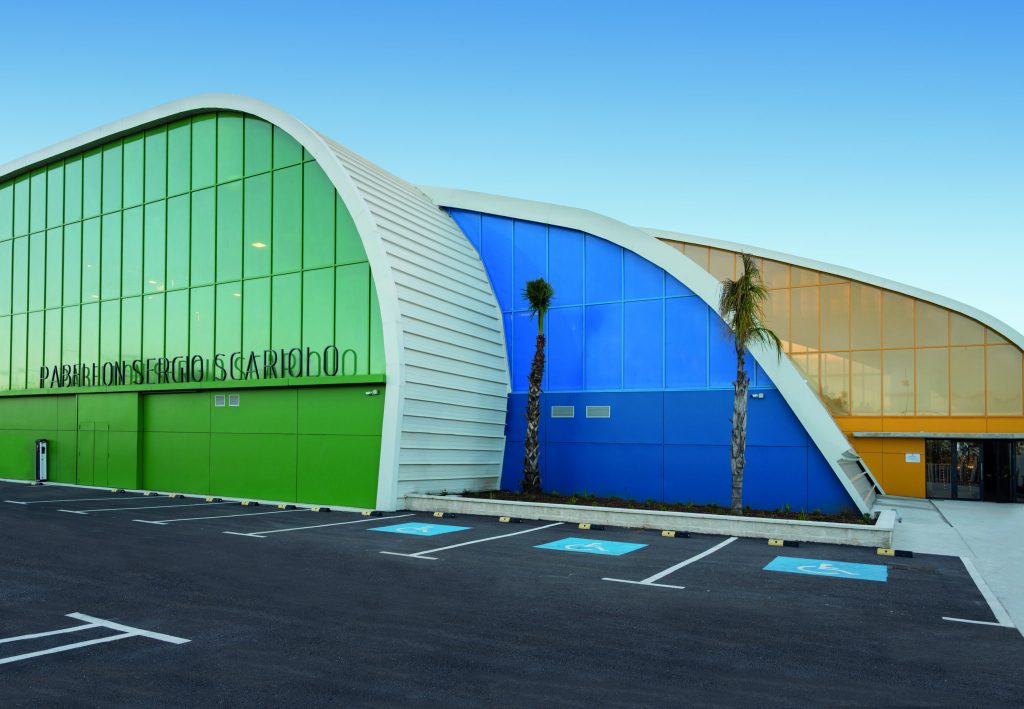
The San Pedro de Alcántara Sports Hall project is an example of how KingZip can transform an architectural envelope into a distinctive design feature.
A continuous envelope that flows from façade to roof
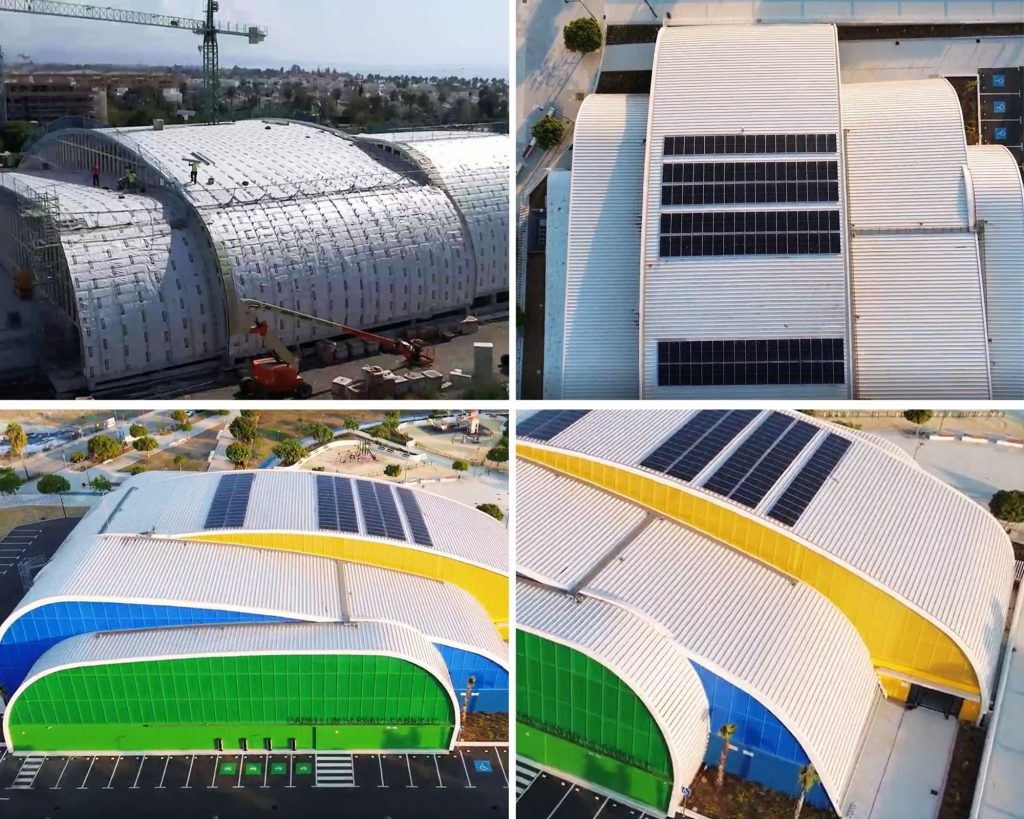
In this project, the KingZip profiled slats fit the curved façade with millimetre precision. But what is most impressive is that the geometry does not stop there: the envelope extends continuously from the vertical walls to the roof, creating a sense of fluidity and unity across the entire volume of the building.
This enveloping effect is achieved thanks to the system’s ability to curve in multiple directions and adapt to three-dimensional shapes without interruptions or visible joints, a technical feat that would be difficult to achieve with other construction systems.
Benefits to the project
- – Aesthetic continuity: the façade and roof are integrated into a single continuous metal skin.
- – Geometric precision: the interlocking panels allow the architectural lines to be maintained without distortion.
- – Speed of execution: on-site fabrication eliminates cuts, unnecessary finishing work and additional transport time.
- – Durability and strength: the use of aluminium and interlocking systems ensures stable performance against weather conditions.
Project team
The San Pedro de Alcántara Sports Pavilion was made possible thanks to the joint efforts of a multidisciplinary team comprising:
- – Architecture: Estudio HUETE Arquitectura
- – KingZip system installation: Grupo PAFER
Their coordination enabled the creation of a technically precise and aesthetically seamless curved cladding, maximising the capabilities of the KingZip system.
Having seen it in practice, it is worth understanding why KingZip is now one of the most advanced solutions in the field of metal cladding.
What is KingZip? The technology that gives total freedom to architectural design
KingZip is a standing seam system for façades and roofs, specifically designed to realise organic geometries with a high level of technical precision. It uses interlocking panels manufactured in continuous lengths from 1 to 150 metres, with the unique feature that they can be produced on-site thanks to mobile production units that are transported directly to the construction site.
This allows building envelopes to be constructed using very long panels, eliminating the need for longitudinal overlaps, which speeds up construction.
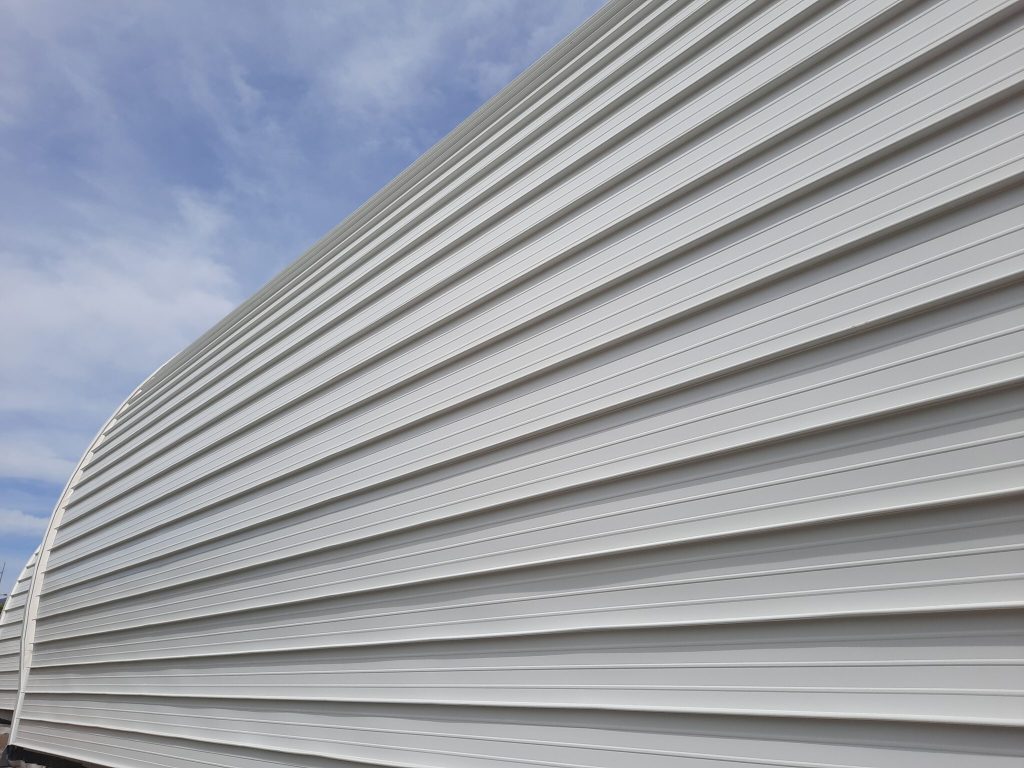
Key features of KingZip:
- – Total adaptability to complex geometries: it allows the creation of building envelopes with angular, convex, concave or conical architectural forms of great technical perfection.
- – On-site fabrication: enables panels of up to 150 m without longitudinal joints, speeding up construction and avoiding fixing points.
- – Highly durable finishes: available in 3000 or 5000 series coated aluminium alloy, or in raw aluminium, stuccoed raw aluminium and embossed raw aluminium, with the following finishes: PVDF or polyester.
- – High performance: excellent structural, thermal and acoustic performance, and A1 fire reaction classification in accordance with standard EN 13501-1. Classified as Broof (t1/t2/t3) in accordance with standard EN 13501-5.
- – Versatile applications: ideal for industrial, commercial and residential buildings, as well as sports facilities.
KingZip, a key tool for contemporary architecture
KingZip offers a unique combination of formal flexibility, technical performance and construction efficiency, making it an ideal solution for projects with a high architectural content. The San Pedro de Alcántara Sports Pavilion is just one example of the potential of this system, which allows for the creation of three-dimensional curved envelopes with total control and no design limitations.